





The Short Answer…
In most rear-end accidents, the driver who hits the vehicle in front is usually at fault. Texas law requires drivers to maintain a safe following distance. When that distance isn’t maintained and a collision occurs, it’s typically presumed that the rear driver was negligent. However, this rule isn’t absolute and there are exceptions where the lead driver may share or hold full responsibility for the crash.
Whether you’re the rear or front driver, fault in a rear end collision isn’t always black and white. Determining who is at fault depends on the circumstances of the crash, the actions of both drivers, and the strength of the evidence collected. For anyone involved in this type of accident, knowing how fault is decided is important not only for your insurance claim but also for any accident settlement you may be entitled to.
Key Takeaways
- Rear drivers are usually at fault in rear-end accidents, but exceptions exist when the front driver is reckless, stops suddenly, or has malfunctioning brake lights.
- Fault is determined by evidence such as police reports, witness testimony, dashcam footage, and accident reconstruction.
- Texas comparative fault law allows victims to recover damages even if they share some responsibility, as long as they are 50% or less at fault.
- Rear-end accident settlements may cover medical bills, lost income, property damage, pain and suffering, and reduced quality of life, but insurance companies often try to minimize payouts.
- Working with an experienced rear end car accident lawyer, like the team at Braker White, gives you the best chance to protect your rights and recover maximum compensation.
Table of Contents
- What Is a Rear-End Accident?
- Is the Rear Driver Always at Fault?
- When the Front Driver May Be at Fault
- Rear-End Collisions Involving Multiple Vehicles
- Determining Fault in a Rear-End Accident
- Texas Comparative Fault in Rear-End Accidents
- Damages Available in a Texas Rear-End Accident Settlement
- What to Do After a Rear-End Car Accident in Texas
- Why West Texans Turn to Braker White After a Rear-End Collision
- Related Articles & Info
What Is a Rear-End Accident?
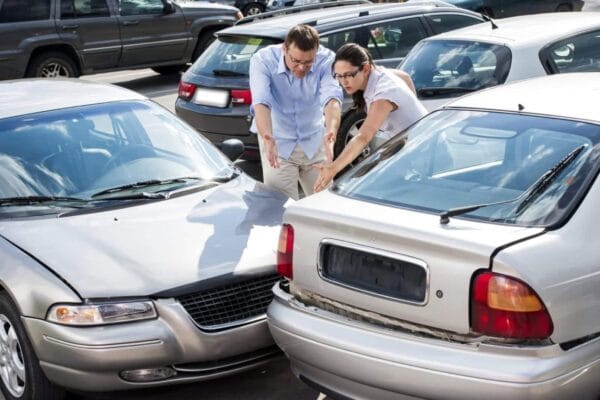
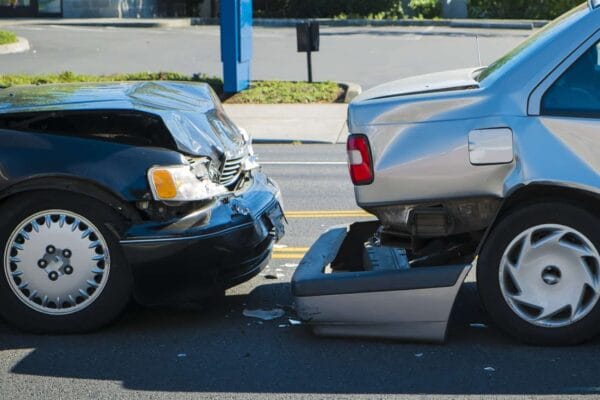
A rear-end accident happens when one vehicle crashes into the back of another. These are among the most common types of car accidents on Texas roads, especially at intersections or in stop-and-go traffic.
Common Injuries From Rear-End Collisions
Even at low speeds, rear-end crashes can cause serious and lasting harm. Here are some of the most frequently reported rear end accident injuries:
- Whiplash
- Concussions and traumatic brain injuries
- Back and spinal injuries
- Soft tissue injuries
- Fractures and broken bones
- Emotional trauma
Common Causes of Rear-End Collisions
Some of the most common causes of rear-end crashes include:
- Distracted driving: Texting, using a GPS, or eating can take a driver’s eyes off the road.
- Following too closely: Not leaving enough space makes it harder to stop safely.
- Speeding: Driving too fast reduces reaction time and increases stopping distance.
- Sudden stops: If the car in front stops suddenly, the driver behind may not react quickly enough.
- Bad weather: Rain, fog, or slick roads can make it harder to stop in time.
- Brake problems: Mechanical issues can prevent a car from slowing down properly.
No matter the cause, rear-end collisions can lead to serious injuries. If you’ve been in one, knowing what caused it can help prove who was at fault.
Is the Rear Driver Always at Fault?
The general rule is that the rear driver is considered responsible for the accident because they are expected to:
- Keep a safe distance from the car in front
- Pay attention to traffic and road conditions
- Stop safely when the vehicle in front slows or stops
But this isn’t always the case. With the right evidence, the rear driver may be able to show that the front driver was partly or fully responsible for the crash.
When the Front Driver May Be at Fault
Although rare, there are situations where the front driver is at fault in a rear end crash, including:
- Sudden or Unnecessary Stops: Brake-checking or stopping without warning for no valid reason may shift fault to the front driver.
- Malfunctioning Brake Lights: If the lead vehicle’s brake lights don’t work, the rear driver may not realize they’re stopping.
- Reversing into Another Vehicle: If the front driver reverses into the rear vehicle, fault can be placed on them.
- Erratic Driving or Road Rage: Weaving, stopping, or blocking traffic deliberately can make the front driver responsible.
While these situations are less common, they show that fault isn’t always simple. If you believe the other driver’s actions caused the crash, it’s important to collect evidence and speak with a lawyer right away.
Rear-End Collisions Involving Multiple Vehicles
In chain-reaction crashes, one rear-end impact can lead to several cars hitting each other in a row. These are often called multi-car pileups and can be very confusing when it comes to figuring out who is at fault.
The driver who caused the first collision may be held responsible for all the damage that follows. But in Texas, fault is not always 100% on one person. Under the state’s comparative negligence law, each driver’s actions are carefully reviewed. If more than one driver made mistakes, the blame (and the costs) can be shared.
If you’re in a rear-end chain collision, don’t assume you’re fully responsible or that the insurance company will be fair. A lawyer can help you protect your rights and show what really happened.
Determining Fault in a Rear-End Accident
In any rear-end collision, figuring out who is at fault is one of the most important steps in building your case and seeking compensation. While the rear driver is usually presumed to be at fault, that’s not always true and this assumption can be challenged with the right evidence.
To figure out who caused the crash, investigators look at:
- The actions of each driver before the crash
- Traffic laws that may have been broken
- Whether one driver had enough time or space to avoid the accident
- Road and weather conditions
- Any distractions or mechanical failures
How Do You Prove Fault?
You need solid proof to support your claim and show that the other driver’s actions caused the accident or that you were not to blame. This evidence includes:
- Police Reports: The report written by the officer at the scene will often include a diagram of the crash, statements from each driver, witness information, and the officer’s opinion about who caused the accident.
- Eyewitness Testimony: People who saw the crash (other drivers, pedestrians, or passengers) can offer unbiased accounts of what happened.
- Dashcam or Traffic Camera Footage: Video evidence is one of the strongest tools for proving fault.
- Vehicle Damage and Accident Reconstruction: The location and severity of the damage on each vehicle can tell a clear story. Experts can even reconstruct the crash using damage reports, skid marks, and car positioning to determine how fast each car was going and whether the crash could have been avoided.
Proving fault is often the key to getting a fair accident settlement. Insurance companies may try to shift blame to reduce how much they pay. That’s why gathering strong evidence and working with a skilled rear end car accident lawyer is so important, especially if fault is being disputed.
Texas Comparative Fault in Rear-End Accidents
In Texas, fault isn’t always all or nothing. The state uses a modified comparative fault rule to decide who pays for damages in a car accident.
Under this rule:
- You can still recover compensation if you were partly at fault, as long as your share of the blame is 50% or less.
- If you are more than 50% at fault, you cannot recover any damages.
- If you are partially at fault, the amount of compensation you receive is reduced by your percentage of fault.
Example: If you were rear-ended but found to be 20% at fault for stopping suddenly without reason, and your damages total $50,000, you would only receive $40,000 (a 20% reduction).
Insurance companies may try to say you share some of the blame to reduce your payout. That’s why it’s critical to have strong evidence and to work with a trusted car accident attorney who understands how Texas law works.
Damages Available in a Texas Rear-End Accident Settlement
If you’ve been injured in a rear end collision, you may be entitled to a settlement to cover your losses. A rear end car accident settlement may cover:
- Medical expenses: Hospital bills, physical therapy, surgery, medications, and future treatment
- Lost wages: Income missed while recovering and any loss of future earning ability
- Property damage: Repairs or replacement of your vehicle
- Pain and suffering: Physical pain, emotional distress, PTSD, or reduced quality of life
- Loss of enjoyment of life: Inability to take part in hobbies, activities, or daily routines you enjoyed before the accident
Average Settlement for a Rear-End Accident
Settlements can vary widely because no two cases are exactly alike. How much a rear end accident is worth depends on multiple factors, including:
- The severity of injuries and whether they are temporary or permanent
- The amount of medical treatment needed now and in the future
- Whether the injury caused missed work or long-term disability
- The strength of evidence proving fault
- The insurance coverage limits of the at-fault driver
Because insurance companies often try to offer less than you may deserve, working with a skilled lawyer can make a huge difference. At Braker White, we fight to ensure victims get the maximum settlement possible for their injuries and financial losses.
What to Do After a Rear-End Car Accident in Texas
Knowing what to do when rear-ended can protect both your health and legal rights:
- Move to safety and call 911.
- Seek medical attention even if you feel fine. Some injuries may be delayed.
- Take photos and gather witness info.
- Notify your insurance company. Avoid admitting fault or making guesses about what caused the accident.
- Contact a rear end car accident attorney to help ensure your rights are protected.
Why West Texans Turn to Braker White After a Rear-End Collision
At Braker White, we know how overwhelming it can be to deal with the aftermath of a rear end collision. With over 60 years of combined legal experience, our car accident attorneys have built a reputation for fighting and winning for people across Midland, Odessa, and throughout West Texas.
Here’s why so many clients trust us after their rear end accident:
- Deep knowledge of Texas law: We understand the traffic rules and liability laws that decide who’s at fault in a rear-end accident.
- Aggressive investigation: We gather police reports, witness statements, dashcam footage, and accident reconstructions to build the strongest case possible.
- Tough negotiation with insurance companies: Insurers often try to blame the wrong driver or minimize payouts. We don’t let them.
- Pursuit of maximum compensation: From medical bills and lost income to pain, suffering, and future care needs, we fight for every dollar you may be entitled to.
- Free case reviews & no upfront fees: We work on a contingency basis, which means you don’t pay us unless we win your case.
When you’ve been injured in an accident, experience matters. Let our proven team put its decades of knowledge to work for you.
Get Your Free Case Review With a Rear-End Accident Lawyer Today
If you’ve been involved in a rear end collision—whether as the front driver or the rear driver—don’t leave your future in the hands of the insurance company. The attorneys at Braker White are ready to gather evidence, protect your rights, and fight for the maximum compensation available. With free consultations and no fees unless we win, there’s nothing to lose by reaching out.
Reach out today to schedule your free case review and let us go to work for you.